You’re currently in Stage 2: Correlation
Your organization has moved beyond basic discovery and is beginning to understand the risk presented by unmanaged secrets.
Security and platform teams are gaining better visibility into where risks exist, who owns them, and which exposures have the greatest business impact. However, as environments scale, fragmented workflows and inconsistent remediation processes slow response times and increase operational complexity.
Your next step is operationalizing remediation by integrating secrets lifecycle management practices directly into developer workflows.

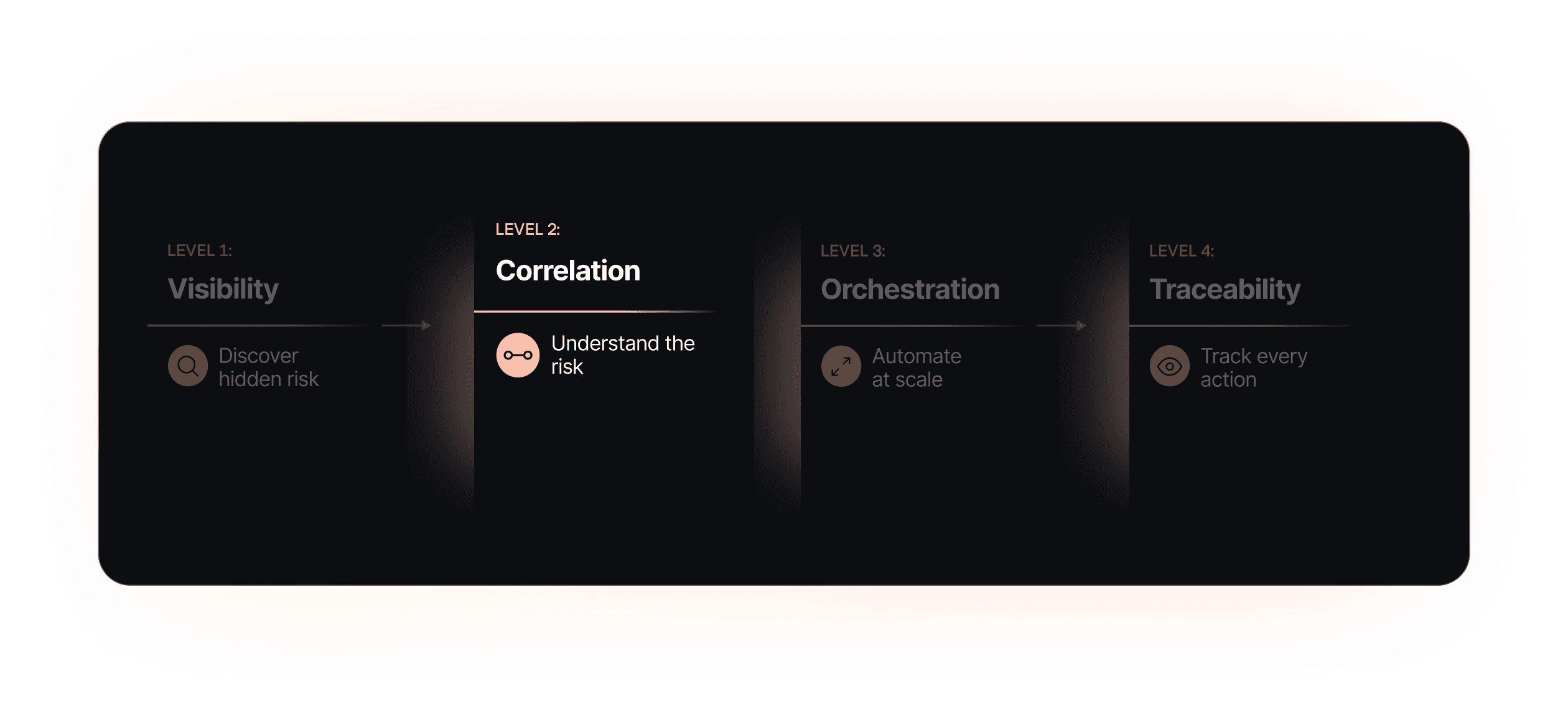

Common practices in this phase
Organizations in the correlation stage are focused on contextualizing risk and improving remediation prioritization.
Correlating exposed secrets with secrets under management
Distinguishing active secrets from stale or unused secrets
Understanding the business impact of exposed credentials
Reducing alert fatigue through contextual risk analysis
»Benefits and challenges in this phase
»What’s working at this stage
- Fewer false positives and duplicate findingsPlus
- Better risk prioritizationPlus
- Richer context around exposed secretsPlus
»What's holding you back
- Manual remediation handoffsminus
- Limited visibility within developer workflowsminus
- Fragmented remediation processesminus
- Extended exposure windowsMinus
How to move to stage 3: orchestration
As environments expand, organizations must move beyond contextual understanding and begin automating remediation across development and security teams.
The orchestration stage focuses on embedding remediation guidance directly into developer workflows, so teams can scale remediation consistently and efficiently.
Uplevel your remediation maturity
- Provide remediation guidance
Integrate remediation guidance directly into existing developer tools and workflows.
- Improve remediation ownership
Map found secrets to developer workflows to reduce remediation delays and improve accountability.
- Reduce alert fatigue with contextual insights
Surface actionable remediation insights instead of overwhelming teams with disconnected findings.
»Related resources
Take the next steps
Your next step is establishing continuous discovery and centralized visibility before operational complexity grows further.