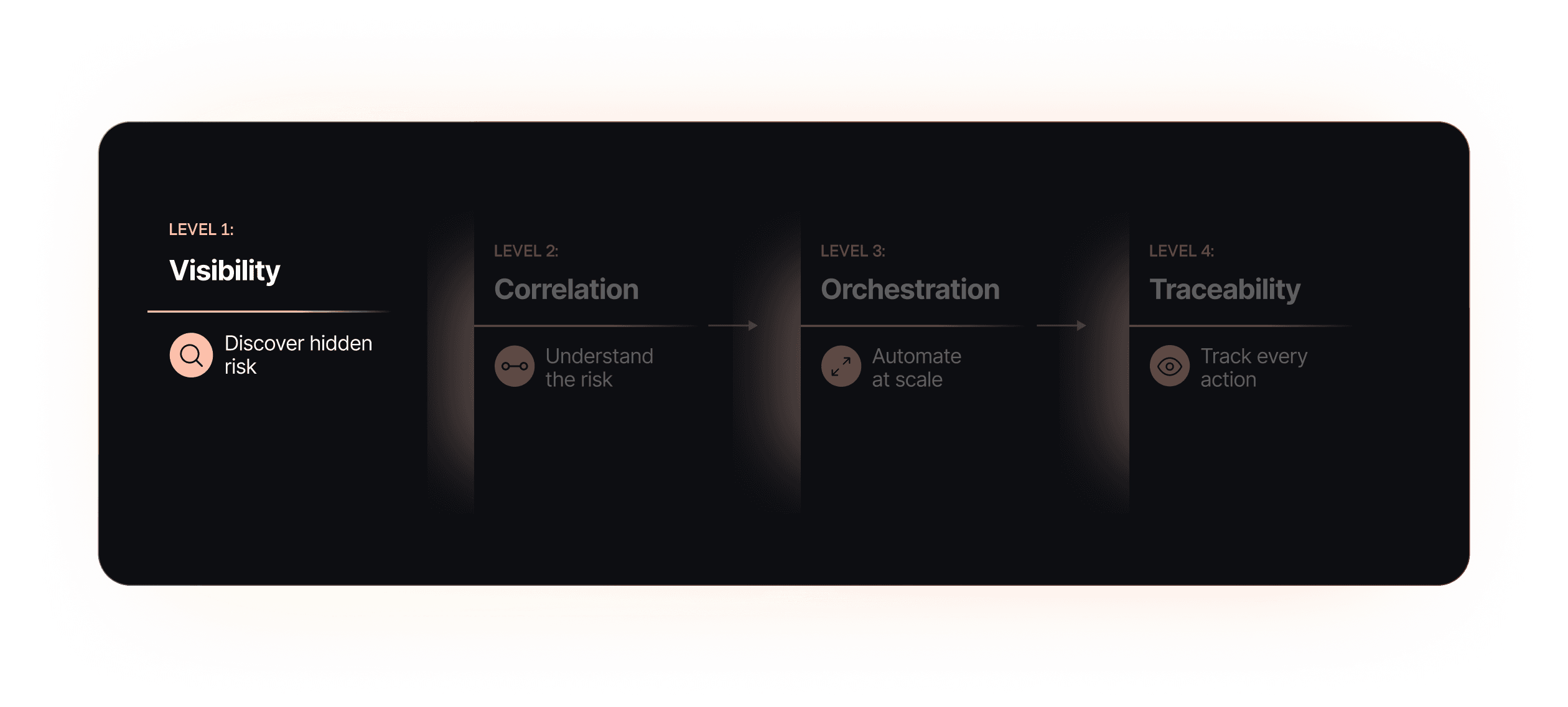
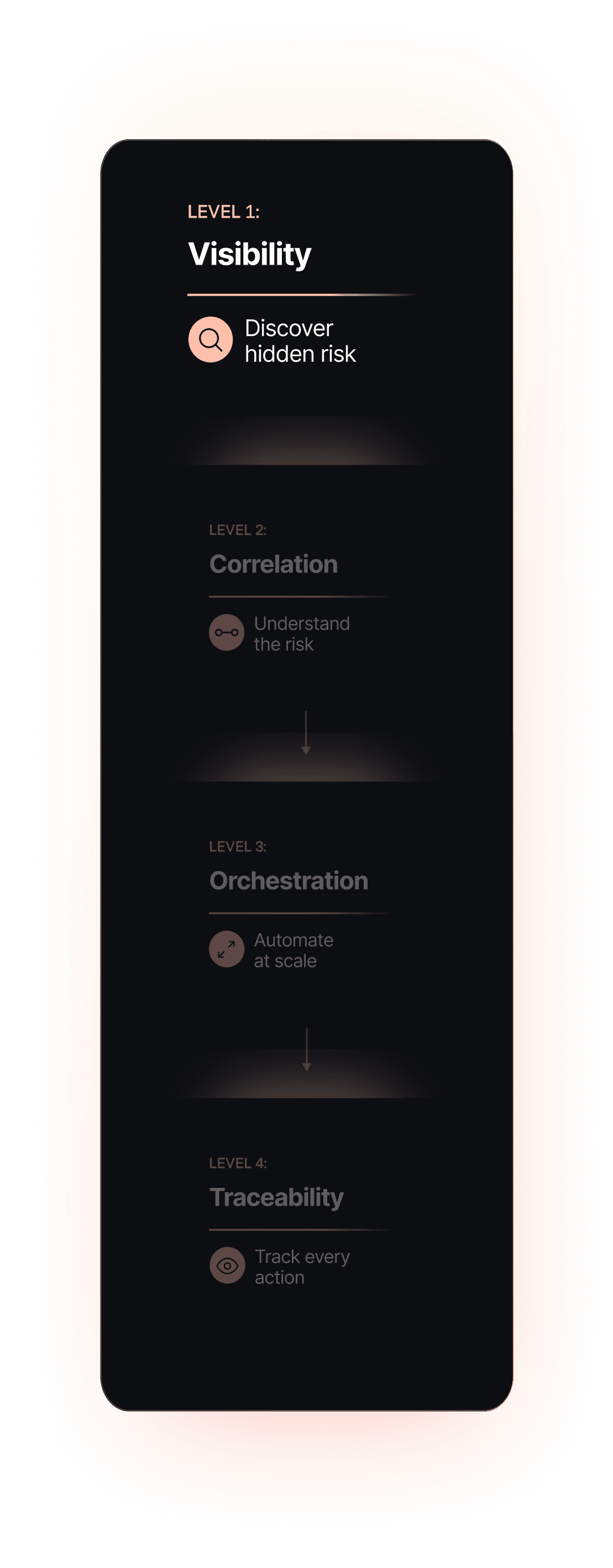
You’re currently in Stage 1: Visibility
Your organization is taking the first steps toward understanding where secrets and machine identities exist across your environment.
As cloud adoption, automation, and AI initiatives accelerate, unmanaged secrets can quickly become difficult to track, govern, and remediate. Many organizations at this stage are still operating reactively, relying on manual discovery processes and fragmented visibility.
Your next step is establishing continuous discovery and centralized visibility before operational complexity grows further.

Common practices in this phase
Organizations in the visibility stage are focused on uncovering hidden risk and understanding where unmanaged secrets exist.
Manually identifying exposed secrets across repositories and pipelines
Introducing scanning into development workflows
Investigating incidents after exposure occurs
Managing secrets inconsistently across teams and environments
Benefits and challenges in this phase
»What’s working at this stage
- Visibility into secret riskPlus
- Awareness of security blind spotsPlus
- Foundation for secrets governance practicesPlus
»Challenges at this stage
- Limited visibility across diverse environmentsminus
- Manual remediationminus
- Fragmented ownership and accountabilityminus
- Alert fatigueMinus
How to move to stage 2: correlation
As environments grow, discovery alone is no longer enough. Organizations must begin connecting secrets to owners, business impact, and operational risk.
The correlation stage focuses on contextual understanding, helping security and platform teams prioritize what matters most and reduce remediation friction.
Uplevel your remediation maturity
- Expand discovery coverage
Continuously scan repositories, CI/CD pipelines, and cloud environments.
- Improve contextual risk analysis
Correlate exposed secrets with existing secrets stored in Vault.
- Establish remediation ownership
Define accountability and workflows for resolving exposed secrets quickly.
- Prioritize high-risk exposure
Focus remediation efforts on critical secrets first.
»Related resources
- Indexing secrets with VaultMichael Kosir and Chris Williams (Community Team at HashiCorp) learn HCP Vault Radar the hard way by setting it up from scratch. In this episode, they explore HCP Vault Radar’s integration with HashiCorp Vault to index secrets. Indexing scans and catalogs secrets to check if they already exist in the secrets manager, streamlining management and preventing duplication.Webinar
Take the next steps
Your next step is establishing continuous discovery and centralized visibility before operational complexity grows further.