
What usually begins as an effort to escape slow, ticket-driven cloud operations often becomes something much more transformative. For enterprises working with LAB³, modernizing provisioning and security quickly evolves into establishing a unified workflow across infrastructure, secrets, and networking — a foundation that enables true cloud velocity and unlocks new possibilities for AI and next-generation architectures.
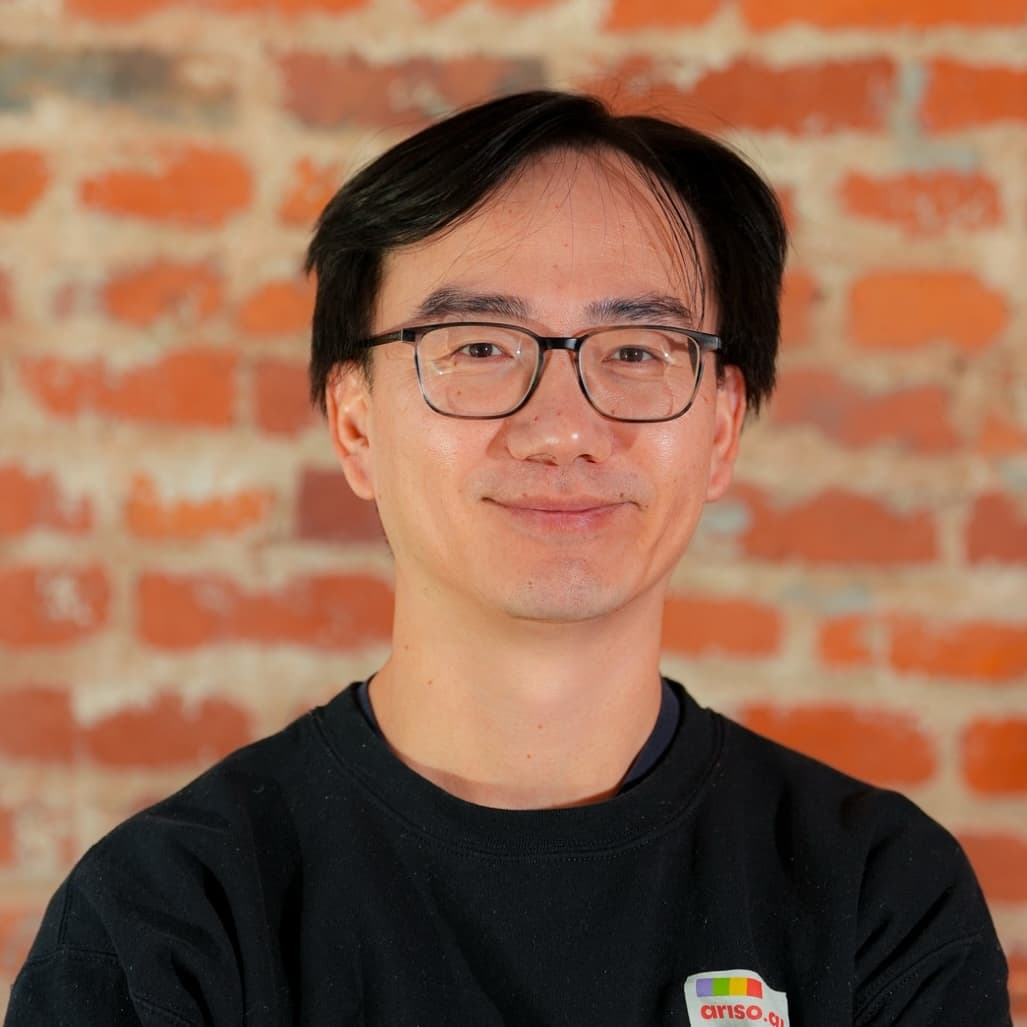
This blog breaks down LAB³’s modernization philosophy, based on real-world insights from Lachlan White, Chief Technology Officer at LAB³ and long-time HashiCorp Ambassador turned IBM Champion.
»Challenge: Cloud adoption stalled by manual processes
Many enterprises assume they’ve modernized simply because their workloads now run in the cloud. But when LAB³ begins assessing their environments, a different reality emerges: Provisioning still runs through manual, ticket-driven workflows, secrets are rotated by hand, and networking changes require slow, error-prone coordination across teams.
According to White, this creates an illusion of progress rather than true cloud transformation:
“Taking six weeks to build a server was good. Now they’re in cloud, it takes three weeks — but we know it can take three minutes.” — Lachlan White, CTO, LAB³
The root problem isn’t cloud adoption, but the lack of shared patterns and foundational standards. Without consistent IaC practices, each team builds infrastructure differently, driving drift, inconsistent security, and bottlenecks across hybrid and multi-cloud environments. When AI enters the picture, these problems escalate further.
Key limitations LAB³ sees most often:
Manual provisioning and ticket queues slowing delivery
Secrets stored or rotated manually, often inconsistently
Fragmented networking practices across clouds
No shared IaC patterns, causing drift and duplicated work
Risk-averse processes that limit autonomy and innovation
»Crawl: Establishing foundations
In the crawl stage, LAB³ focuses on rebuilding the basics: Shared architectural patterns, consistent IBM Terraform on the HashiCorp Cloud Platform usage, and reliable secrets management. In this phase, the team focuses on stabilizing the environment, reducing risk, and ensuring teams have a strong foundation before automation is scaled.
»Walk: Standardization as the catalyst for velocity
Reaching the walk stage marks a turning point. LAB³ helps teams shift from ad hoc, inconsistent builds to a unified, scalable operating model:
IBM Terraform introduces reusable, well-architected modules
IBM Vault embeds proper rotation and access controls into workflows
IBM Consul aligns networking practices across distributed environments
As White notes, this stage is about efficiency, not for its own sake, but to accelerate time-to-market:
“The walk phase is about making it efficient rather than just doing it because we’ve been told it’s a good practice.” — Lachlan White, CTO, LAB³
»Run: Platforms ready for innovation at scale
By the run stage, organizations operate like modern engineering teams. LAB³ introduces platform engineering practices, FinOps feedback loops, and advanced Vault and Consul capabilities. This unlocks new space for innovation, from AI frameworks to event-driven architectures. Or as White puts it, LAB³ helps teams explore “the art of the possible.”
»One cloud experience, everywhere
LAB³’s transformational model is powered by the HashiCorp ecosystem, enabling enterprises to orchestrate infrastructure, security, and connectivity through one consistent workflow across every cloud and every stage of their modernization journey.
»Terraform: Standardized infrastructure delivery
Terraform replaces fragmented, manually built environments with reusable, standardized modules that scale across teams and clouds. By adopting architectural blueprints and well-architected modules, organizations typically see provisioning speed improve by around 70%, reducing delivery from weeks to minutes.
This level of automation and consistency ensures infrastructure is governed, repeatable, and ready to support AI-driven workloads.
»Vault: Secure, automated secrets management
Vault centralizes secrets and automates rotation, eliminating the risks associated with manual handling. As teams grow and workloads diversify, Vault provides least-privilege access and the auditability required for compliance.
»Consul: Reliable, consistent service connectivity
Consul brings structure to distributed networking — service discovery, routing, and Terraform Sync — ensuring that applications communicate predictably in hybrid and multi-cloud environments.
“The amalgamation of all HashiCorp products enables us to get a unified workflow. We're able to give the developers and the engineers a single unified tool set and experience to extract the value of all of the abstraction we're putting into the platform.” — Lachlan White, CTO, LAB³
Together, these tools form a unified cloud operating model that spans infrastructure, security, and networking, reducing operational overhead by 30-50%.
»A cloud platform you can bank on
Nowhere was this transformation more visible than at a major Australian bank. With hundreds of engineering teams working independently, cloud adoption outpaced consistency, and operational overhead grew as AI workloads arrived.
LAB³ responded by rebuilding the foundations:
Terraform to unify provisioning and enforce RBAC
IaC baselines to eliminate one-off templates and drift
Vault to centralize secrets and automate rotation
A curated AI environment for safe, rapid experimentation
White describes the moment the team reset the foundation:
“We weren’t provisioning any of the infrastructure through IaC, so we went back to square one — put everything into HCP Terraform with proper RBAC, then brought in Vault so we weren’t exposing things we didn’t want to.” — Lachlan White, CTO, LAB³
With these systems in place, the bank gained a secure, standardized platform that now powers its emerging AI workloads and is being expanded across its broader ecosystem.
»Results:
Provisioning drops from weeks to minutes with standardized Terraform automation
Secrets are governed and automated via Vault
Networking becomes consistent and predictable with Consul
Delivery accelerates with pre-approved templates and guardrails
Operational overhead shrinks as manual processes are removed
»Gearing up for the next wave of intelligent systems
Looking ahead, LAB³ is preparing clients for the next generation of cloud-native innovation — from AI and agentic systems to microservices, event-driven architectures, and beyond.
White sees this shift clearly: “AI dramatically increases the speed of change and the surface area of access across modern platforms. As agents, pipelines, and services are introduced at pace, non-human identity becomes the dominant security challenge. Vault enables workload-based authentication and short-lived credentials, giving teams the freedom to adopt new tools quickly without relying on long-lived shared secrets.”
In order to benefit from these emerging technologies, though, White emphasizes that enterprises need to invest in strong foundations today:
“You want to look at these capabilities because they provide the foundational layer for your enterprise's technology stack to address the value of new trends in markets such as artificial intelligence,” he says and then adds, “we can apply some of the security and automation lessons, and even look to add AI to those foundational elements to increase the velocity at which we can develop.”
LAB³ plans to extend AI into the platform itself by:
Automating Terraform module creation and config validation
Enhancing security through AI-driven anomaly detection
Improving developer experience with intelligent IDE guardrails
Enabling agent-based architectures requiring dynamic trust and ephemeral environments
What’s more, they’ve now incorporated agentic AI to further increase productivity gains with the Terraform MCP Server as they enable an agentic workforce to amplify the benefits of their deep technical expertise at scale.
The HashiCorp ecosystem remains critical to these ambitions, ensuring that the underlying platform is stable, secure, and adaptable enough to support whatever comes next.
You can read the full story on our Case study library (no registration):