
Azure hub-and-spoke networking for HCP Vault Dedicated is now generally available, enabling enterprises to integrate Vault directly into centralized Azure network architectures without custom routing, bespoke peering patterns, or Vault-specific exceptions.
The latest release expands the support available to Vault customers who require a clean separation of product and infrastructure management scaled for complex networking architectures. Organizations that require platform standardization and are working toward cloud security maturity rely on HashiCorp Virtual Networks (HVNs) in the HashiCorpCloud Platform (HCP) for the managed services that come with HCP to solve the layered challenges of security, connectivity, operational, and scalability problems that come with running critical software across complex, modern hybrid and multi-cloud environments.
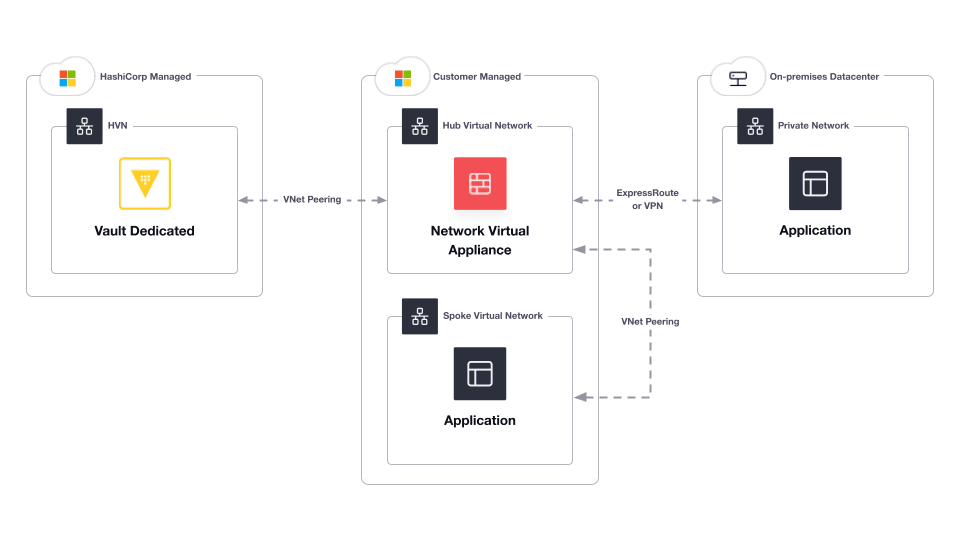
Fig. 1: This topology is recommended for centrally managing transitive routing between spoke virtual networks and on-premises networks.
»Private connectivity to enterprise environments
Most enterprises operate in hybrid or multi-cloud environments, bringing together public cloud infrastructure, and on-premises data centers such as the consistent and secure integration between HCP and their enterprise environments. Organizations that operate on a virtual network have a secure private connectivity hub that allows them to meet regulatory and compliance requirements while also simplifying routing, firewall management, and security reviews.
A HashiCorp Virtual Network can be peer-connected to customer-owned networks such as Amazon Web Services Virtual Private Cloud (AWS VPC) or a Microsoft Azure Virtual Network (Azure VNet). For HCP Vault Dedicated customers on Azure, workloads only communicate over private connectivity.
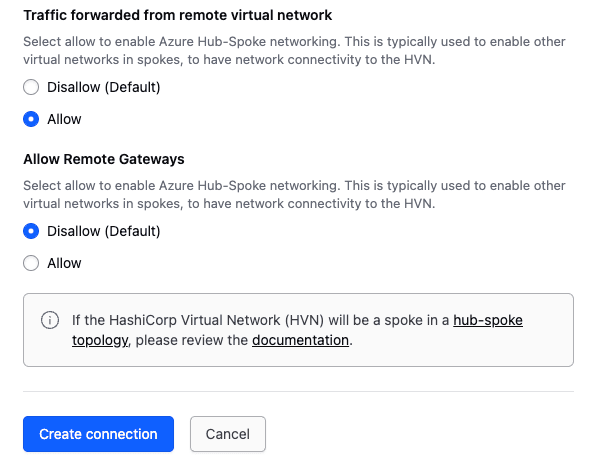
Fig. 2: Peering connection configuration can be enabled by Vault operators with in-product support and documentation.
»Gaining further operational efficiency as a standard platform component
With Azure hub-and-spoke GA, Vault integrates into the organization's central hub network, leveraging existing shared services, such as firewalls, DNS, routing, and inspection. While standard network configurations is still required, Vault follows the same ingress and egress patterns as other Tier 0 services.
HCP tightly integrates with Azure, enabling secure connectivity to Vault, meaning it no longer requires special-case architecture designs. It fits cleanly into an organization’s Azure reference architecture. Fewer architecture exceptions reduce platform friction.
»Improve network security and reduce operational complexity
Enterprises achieve network security with centralized routing, firewall policy enforcement, network monitoring, and logging.
Placing HCP Vault Dedicated into this model means:
Network rules are defined once in the hub and aren’t repeated with every Vault deployment
Security teams can review and approve patterns, as opposed to every implementation
Changes (adding applications, peers, or even regions) typically will not require Vault-specific configuration changes but may still require updates to centralized network policies depending on the environment
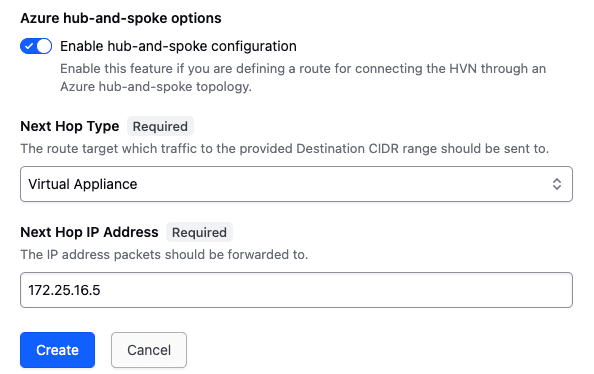
Fig. 3: Define one or more HVN Routes for all CIDR Ranges that HCP Vault Dedicated needs to reach. Configure the HCP peering connection for the hub-and-spoke NVA topology.
As a result, operational improvements will manifest for teams who cover cloud networking, security operations, and platform engineering. This could look like:
Fewer network tickets per Vault consumer
Less bespoke firewall troubleshooting
Lower mean time to resolution during incidents
»Clear separation of duties means stronger isolation
Secrets management with Vault is a Tier 0 security service, and there are clear isolation boundaries with Azure hub-and-spoke, as well as controlled spoke-to-spoke communication and central inspection and logging paths. Within this model, Vault is deliberately placed in the highest-trust zone, where Vault traffic is explicitly controlled. Centralized inspection and controlled spoke-to-spoke communication help reduce lateral movement risks and enforce clearer isolation boundaries for Vault traffic.
»Scale and standardize securely
With Vault networked at the hub level, it can act as a true shared platform service. It’s no longer run on exceptions and architectural divergences, rather it’s integrated cleanly into the network and can be adopted widely across the organization rather than just to isolated teams. Hub-and-spoke GA support means organizations aren’t accumulating long-term architectural debt with custom routing logic, ad hoc peering, or multiple firewall exceptions. Rather, it preserves architectural integrity for the organization.
As organizations mature their Azure platform operating models, centralized networking patterns like hub-and-spoke have become foundational for governance, inspection, routing, and shared services. Security infrastructure that cannot integrate cleanly into these architectures often creates operational exceptions that slow adoption and increase long-term complexity.
With Azure hub-and-spoke networking now generally available for HCP Vault Dedicated, organizations can integrate Vault directly into established Azure reference architectures using the same centralized controls and operational patterns already applied across their cloud estate. This allows platform and security teams to scale Vault adoption without introducing bespoke routing models, duplicated security controls, or one-off network exceptions. They can scale their Azure footprint confidently knowing HCP Vault Dedicated aligns with established network patterns.
Learn more about hub-and-spoke options in this documentation, as well as the earlier general availability of the AWS PrivateLink integration here for Vault Dedicated.