
Detection surfaces secret sprawl across code repositories, collaboration tools, and cloud environments. But discovery alone does not reduce risk. Once a secret is exposed, the real challenge is understanding its relevance, validating whether it is still active, determining whether it is already being managed securely, and what the right remediation path should be. In practice, this process rarely sits with one team or one system. Security may identify the issue, but developers, platform teams, and operations often play a role in resolving it. The work likely also spans multiple workflows, from notifying the right owner to triggering follow-up and tracking the issue through resolution.
This is where Vault Radar comes in. The goal is not only to help teams detect secrets, but also to help organizations build a more mature remediation process around them – one with stronger context, better workflow alignment, clearer accountability, and that shows measurable progress over time.
»Secret correlation: A clearer path from detection to control
Secret detection becomes more useful when teams can quickly understand whether a finding points to unmanaged exposure or to a secret that is already under centralized control.
Vault and AWS Secrets Manager correlation helps answer that by allowing Vault Radar to correlate findings with stored secrets. That added context makes each finding more actionable. Teams can better understand which exposed secrets may need rotation, which are already managed in an approved system, and where exposure may reflect a broader governance gap.
This distinction matters because not every finding carries the same remediation path. A secret that is already managed in Vault may still require action if it has been exposed, but teams can approach that response with stronger context around ownership, storage, and lifecycle management. A secret that is not correlated, by contrast, may indicate that credentials are being created, copied, or retained outside sanctioned secret management workflows.
This is where correlation becomes especially valuable. It helps them see whether secret management practices are being followed consistently across the organization. Over time, those patterns can reveal where centralized control is working as intended and where secrets are still being handled outside approved systems, teams, or workflows.
The outcome is a more direct path from discovery to control. Rather than treating secret scanning as a standalone visibility layer, organizations can use correlation to prioritize remediation with greater confidence and strengthen secret governance over time.
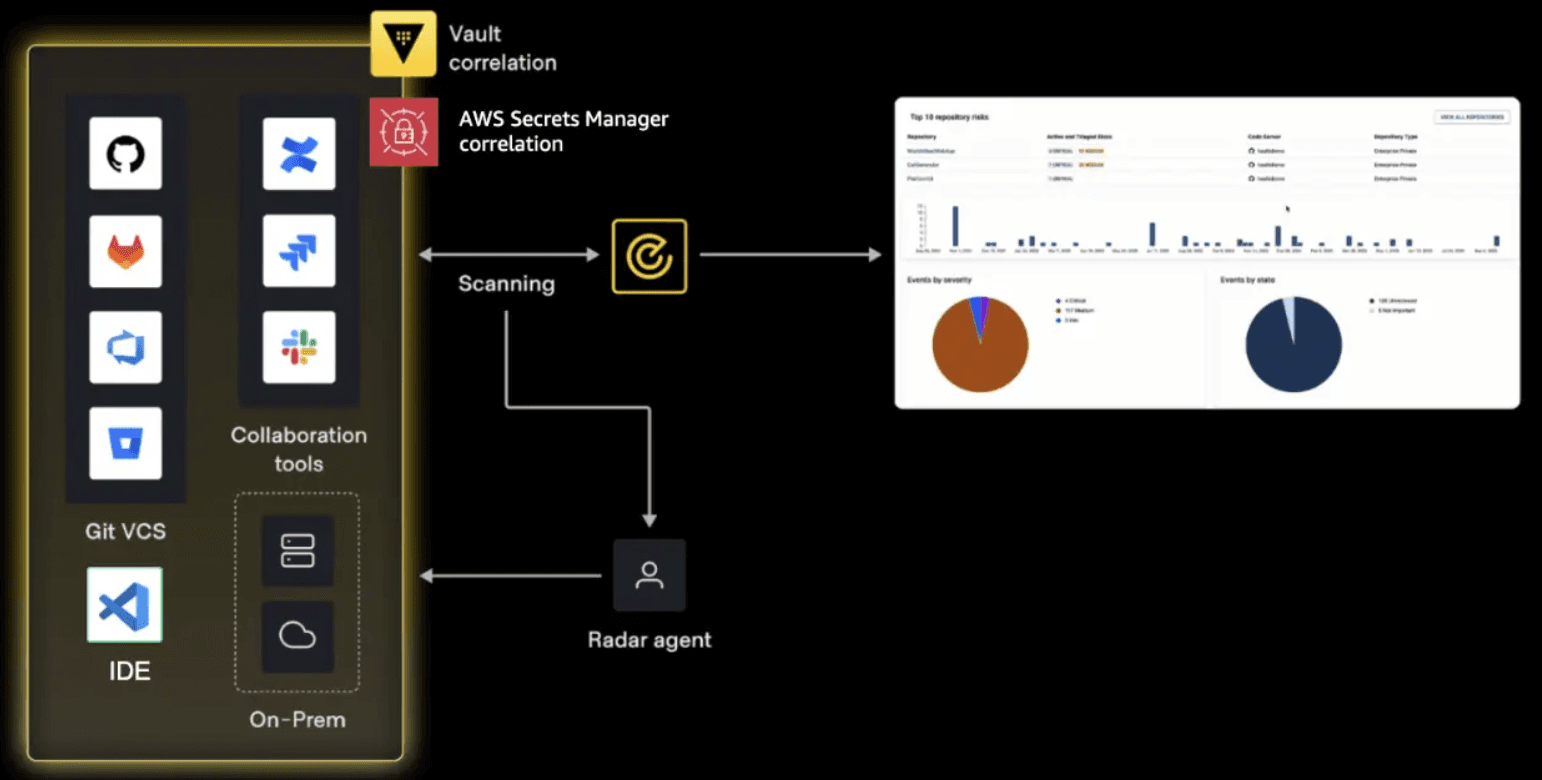
Vault Radar correlates findings with stored secrets.
»Webhooks: Extending remediation into the workflows teams already use
One of the most important factors in secret remediation is making sure that exposure reaches the right workflow owner quickly enough to drive action.
In most organizations, remediation does not live in a single tool. Ownership, follow-up, and resolution often move through ticketing platforms, messaging tools, internal automation, and incident workflows. As a result, the effectiveness of secret detection depends in part on how smoothly findings can enter those existing operational processes.
Webhook support helps Vault Radar strengthen that connection by sending event data to external systems in real time. That makes it easier to route findings to the right teams, trigger next steps, and connect secret exposure to the workflows already used to manage operational work. For some organizations, that may mean opening tickets automatically. For others, it may mean sending alerts into collaboration tools or triggering internal automation.
The value is not simply that Vault Radar can integrate with other tools. It is that teams can reduce the operational gap between discovery and response. When findings can move directly into the tools teams already rely on, remediation becomes easier to coordinate, easier to sustain, and easier to scale. That reduces friction between discovery and response and helps organizations embed secret remediation into the way modern teams already work.
»Remediation reporting: Better visibility into progress
As secret detection programs mature, visibility into findings needs to be matched by visibility into progress.
Remediation reporting helps make that progress easier to see. By showing what is new, what has been resolved, how long remediation is taking, and where response may be slowing, teams gain a clearer view into how secret remediation is performing across the organization. This shifts the conversation from how many secrets were found to how effectively exposure is being reduced over time.
Teams can use trends such as open versus resolved secrets, remediation timelines, and patterns across repositories and data sources to prioritize more confidently and strengthen follow-through. Security leaders gain a clearer basis for understanding whether the program is improving, where bottlenecks exist, and how remediation efforts are translating into measurable outcomes.
As programs scale, this visibility becomes even more important. Remediation reporting helps teams demonstrate progress, reinforce accountability, and show how secret detection is contributing to overall risk reduction. Instead of only tracking exposure, organizations can better understand how responsiveness is improving, and opportunities to strengthen remediation practices.
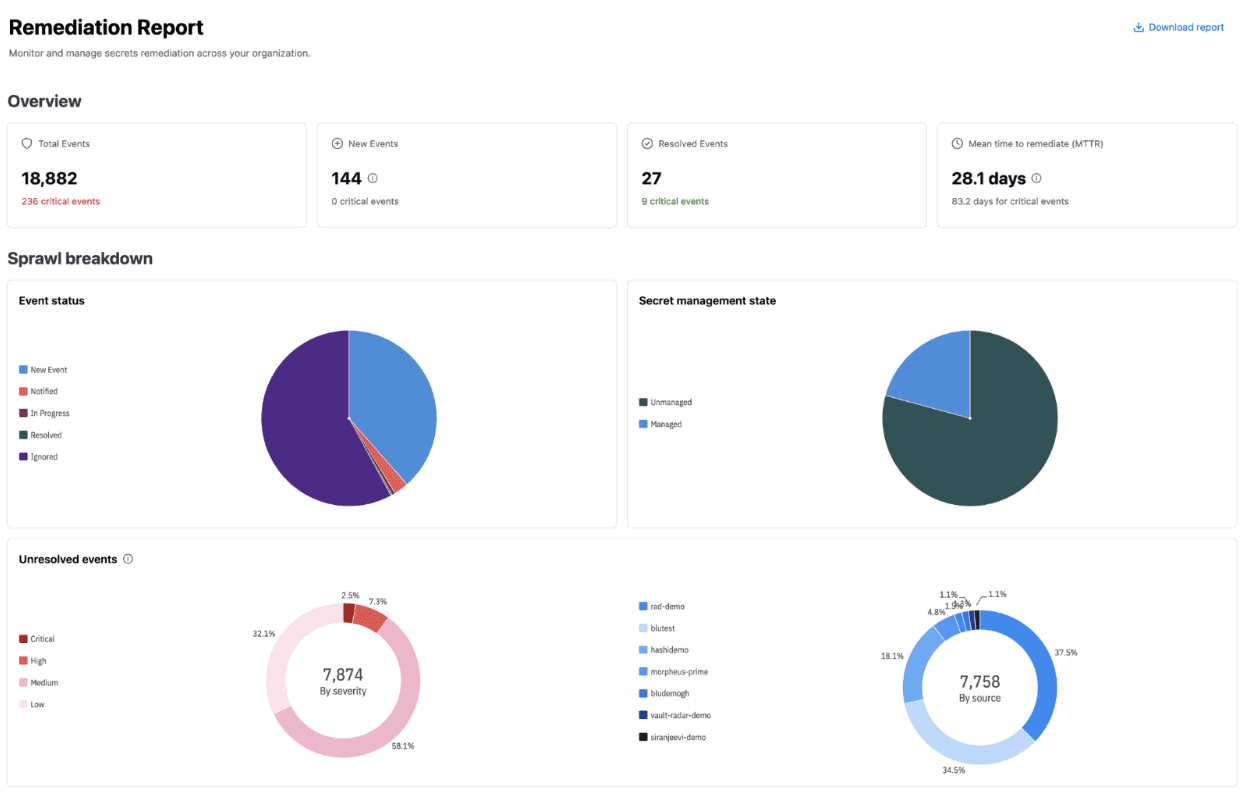
Remediation report
»Traceability: Creating accountability across the remediation lifecycle
Traceability builds confidence in the remediation process. By preserving the lifecycle history of each detected secret from discovery through resolution, traceability gives teams a clear view of how remediation is progressing over time. Rather than reducing an event to a single status, it shows when a secret was identified, when it was acknowledged, what actions were taken, and when it was resolved.
This historical visibility supports stronger coordination across security, development, and platform teams. Everyone involved can work from the same event history, with a shared understanding of ownership, status changes, and next steps. This makes remediation easier to manage and supports more consistent follow-through across the organization.
It also provides critical forensic context for security events and compliance audits. By preserving a detailed record of how an issue was handled, organizations can better understand the sequence of actions taken during an incident, support post-incident review, and demonstrate that remediation followed expected processes and controls.
As programs scale, that lifecycle view becomes even more valuable. Historical context helps organizations recognize reoccurring patterns, improve process consistency, and strengthen how remediation is managed across repositories, teams, and environments. Rather than relying on fragmented records across multiple systems, teams have a more complete and accessible view of the remediation journey.
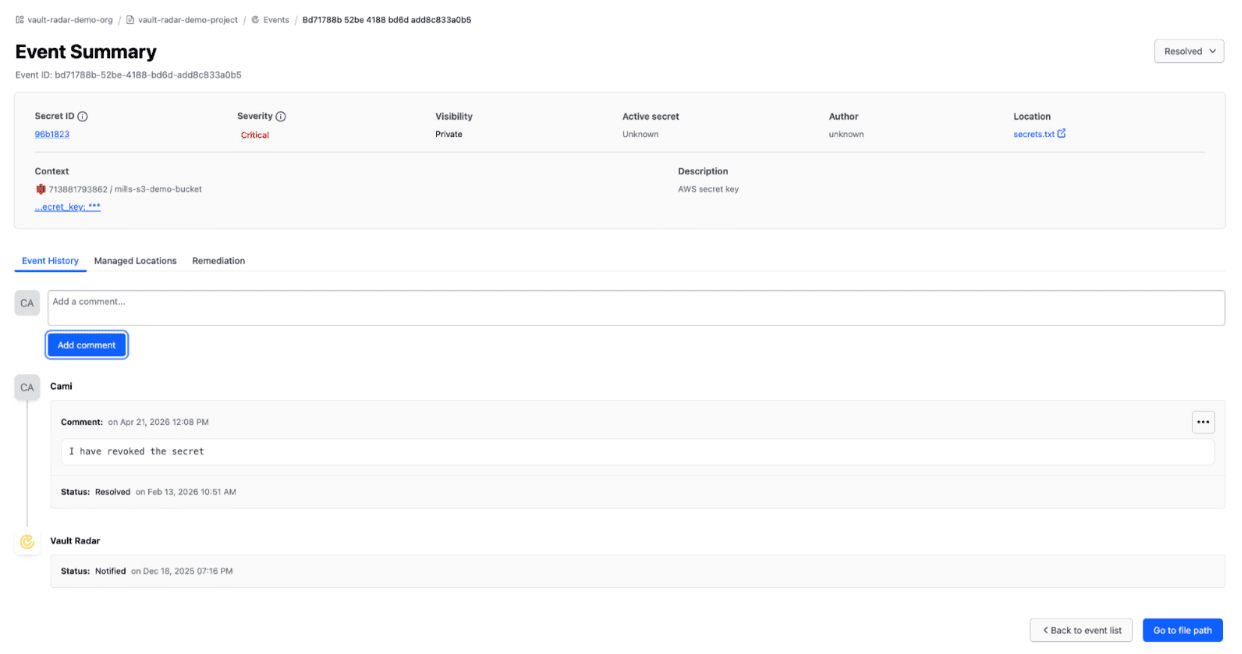
Event summary
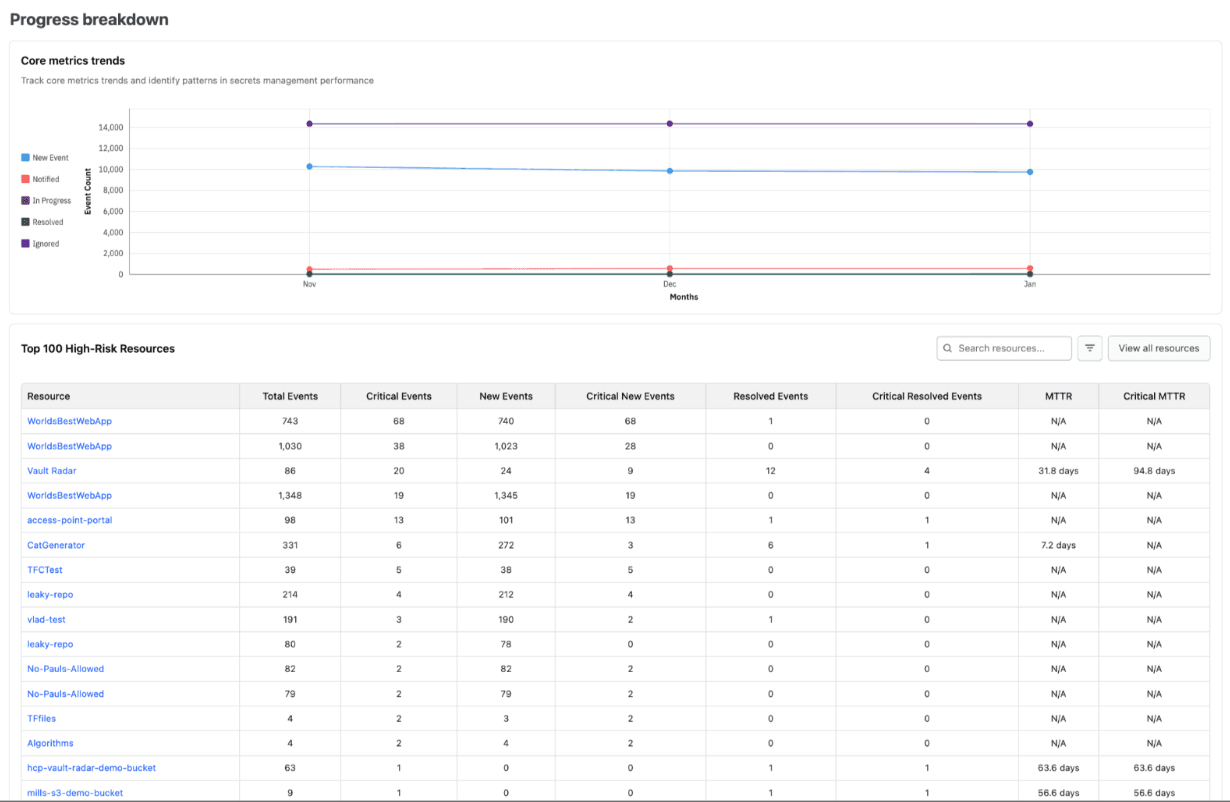
Progress breakdown
»From detection to measurable security outcomes
Secret detection is an important starting point, but the strongest outcomes come from how well organizations can act on what they find.
Vault Radar helps organizations move from identifying exposed secrets to reducing the risk those exposures represent. By connecting detection with Vault, extending findings into operational workflows through webhooks, and improving visibility through reporting and traceability, teams gain a clearer path from discovery to resolution.
The result is a more complete remediation model, one that supports better coordination across teams, clearer accountability, and more measurable progress over time.
This is where secret detection becomes most valuable: when it helps organizations not only find exposures, but also reduce them through processes that are more consistent, more scalable, and better aligned to long-term risk reduction.
See how Vault Radar can help your organization reduce secret exposure with a more coordinated remediation workflow. Sign up for a free trial today.